
The One Thing Every Family Forgets When Planning a Move
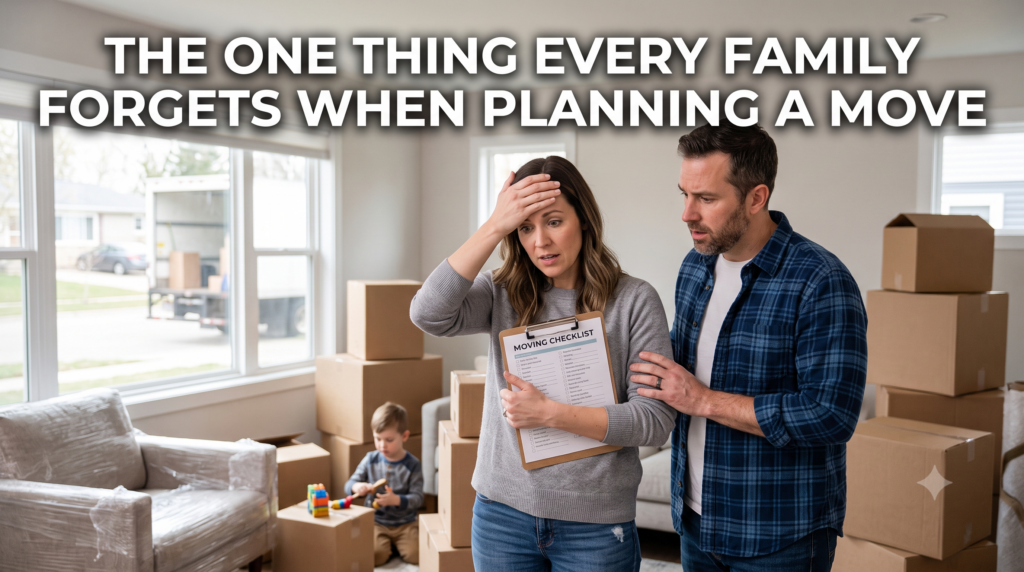
You’re standing in your new home surrounded by boxes. Your family is exhausted. Nobody has eaten a proper meal in two days. The kids are cranky. Your partner is frustrated. And somewhere in the chaos, you realize you haven’t slept in your new bedroom yet because you’ve been too busy unpacking everything else.
And then it hits you: you forgot the most important thing.
You forgot to take care of yourselves.
This is the one thing that every family forgets when planning a move. Not the boxes. Not the tape. Not the logistics. They forget that a move is as much emotional as it is physical. They forget that their own wellbeing matters. They forget to prioritize basic human needs like rest, food, comfort, and emotional processing while they’re trying to get everything organized.
And that’s the moment when a move that should feel like a fresh start actually feels like a disaster.
The Move That Costs More Than Money
Here’s what most families do when they plan a move.
They focus on logistics. They make a checklist. They organize what needs to happen when. They think about boxes and furniture and which room to unpack first. They plan the move like it’s a project to be completed rather than an experience to be managed.
And then moving day arrives and everything goes sideways because they forgot about the human element.
A move isn’t just about getting your stuff from one place to another. It’s about a family transitioning to a new home. It’s about leaving a place where you have memories. It’s about adjusting to a new neighborhood, new schools, new routines. It’s about your kids processing the change. It’s about your partner dealing with the stress. It’s about you managing your own emotions while trying to hold everything together for everyone else.
That’s a lot. That’s way more complex than packing boxes.
But most families don’t acknowledge this. They just push through. They unpack frantically. They try to make everything normal as fast as possible. They don’t give themselves permission to rest or process or adjust. They don’t acknowledge that moving is hard, not just physically but emotionally.
And by the time they realize this, they’re exhausted. Their family is stressed. The whole experience has been harder than it needed to be. And the fresh start they were hoping for feels more like a forced march.
What Families Actually Need During a Move
Let me tell you what actually matters when you’re moving your family.
First, you need rest. Moving is physically exhausting. You need sleep. Real sleep. Not passing out after 12 hours of unpacking and waking up still exhausted. You need actual rest so your body can recover and your brain can function.
Second, you need food. Real food. Not drive-thru meals and takeout every single day. Your body needs nutrition to handle the physical and emotional stress of moving. When you’re eating poorly and not resting, everything feels harder.
Third, you need emotional space. Moving triggers emotions. Leaving your old home. Starting over in a new place. Helping your kids adjust. Supporting your partner. Managing your own stress. You need to acknowledge these emotions instead of just pushing through them.
Fourth, you need connection. With your family. With your partner. With your kids. Moving can pull families apart if you’re all stressed and exhausted. You need time together that isn’t about unpacking boxes. You need to talk about how everyone is feeling.
Fifth, you need to make your bedroom comfortable first. Not the living room. Not the kitchen. Your bedroom. Because at the end of the day, you need a space where you can rest and feel okay. If you’re still unpacking and adjusting, you need that bedroom to be your sanctuary.
Sixth, you need permission to slow down. You don’t have to unpack everything in the first week. You don’t have to get your new home completely organized immediately. You can unpack gradually. You can adjust slowly. You can give yourself time.
Most families skip all of this. They just push hard until everything is done. And then they’re all burned out.
Why Moving Falls Apart When You Forget This
Here’s what happens when families forget to take care of themselves during a move.
Everyone gets exhausted. When you’re not sleeping and not eating well, everything becomes harder. Small problems feel huge. Regular stress feels unbearable. Your whole family becomes short-tempered and frustrated.
The kids struggle with the transition. When parents are stressed and exhausted, kids pick up on that energy. They become anxious about the move instead of excited. They don’t adjust well to the new home. They struggle in new schools because they’re stressed at home.
Your relationship suffers. When you and your partner are both exhausted and stressed, you don’t communicate well. You snap at each other. You don’t support each other. Moving can damage relationships when you’re not taking care of the emotional side of it.
The move takes longer to feel normal. When you just power through and unpack frantically, it takes months to feel settled. You’re still finding boxes in closets in October if you moved in August. The new home doesn’t feel like home because you never really processed the move.
And here’s the thing that really matters: the fresh start you were hoping for gets buried under exhaustion and stress. You move to a new home hoping for a new beginning. But if you’re burned out by the moving process, you can’t enjoy that new beginning. You’re just trying to recover.
How Smart Families Actually Move
Here’s how families that understand this actually approach moves.
They prioritize their own wellbeing first. They plan rest into their moving timeline. They plan good meals. They acknowledge emotions. They talk about how everyone is feeling.
They use efficient systems so the move doesn’t take as long or exhaust them as much. When you use reusable moving totes instead of cardboard boxes, the packing is more efficient. When you have organized delivery and pickup services, you’re not stressed about transport. When you use an organized system, the move goes faster and you recover sooner.
They set up their bedroom first. Before the living room. Before the kitchen. Before anything else. Because that’s their sanctuary. That’s where they rest. That’s where they recover.
They give themselves permission to unpack gradually. They don’t try to do everything in the first week. They unpack one room at a time. They take breaks. They let the process happen naturally instead of forcing it.
They prioritize family connection. They have meals together where nobody talks about unpacking. They go explore the new neighborhood together. They help each other adjust instead of just working in isolation.
They celebrate the move. They acknowledge that they did something hard. They acknowledge that the whole family went through something big. They celebrate the fresh start and the new beginning instead of just being relieved it’s over.
This is how moves feel good. This is how families actually benefit from moving instead of just surviving it.
Making Your Move About More Than Just Boxes
The one thing every family forgets is that moving is about people, not just possessions.
It’s about how you transition. It’s about how your kids adjust. It’s about how your family processes this change. It’s about how you take care of yourselves while you’re managing a big life transition.
Most families focus on the boxes and forget about the humans inside those boxes. They get so caught up in the logistics that they forget to take care of the emotional and physical needs that matter way more than getting unpacked on a specific timeline.
But you’re different now. You understand. Moving is as much emotional as it is physical. Your wellbeing matters. Your family’s wellbeing matters. Taking care of yourselves during a move isn’t selfish. It’s essential.
Use efficient systems that don’t exhaust you. Plan rest into your timeline. Prioritize your bedroom first. Give yourself permission to adjust gradually. Talk to your family about how everyone is feeling.
That’s the move that actually works. That’s the fresh start that feels real. That’s how you move your family in a way that brings you closer instead of burning you out.
Your new home is waiting. But more importantly, your family is waiting. Take care of them. Take care of yourself. Everything else will follow.
Before you go, here’s a couple laughs to make your move better:
Why did the family bring a therapist to their move? Because unpacking emotions is just as important as unpacking boxes!
What’s the first thing smart families set up in their new home? The couch — so they have somewhere comfortable to cry about how much stuff they still have to unpack!
Ready to move your family in a way that actually works? Explore our rental packages and discover how efficient systems give you back your time, energy, and wellbeing during your move.
—Mellisa
Founder, Stack N Go Totes
“No Boxes. No Mess. No Stress.”